Case studyadHere
Turning lead data into a creative source of truth.
We stopped guessing who converts and started designing for them.
Results at a glance
~8%
conversion lift from one research-informed headline change
10%+
gross profit increase on that same test
2×+
rate of producing a winning test variant
01The challenge
One brand voice, many different audiences.
Across a portfolio of brands and programs, headlines, targeting and audience segments were mostly decided on instinct and brand-wide assumptions. But the audience wasn’t one audience. Motivations, education background and readiness to convert varied a lot by region and by program, and the creative treated everyone the same.
02My role
What I made vs. what I directed.
Made myself
- The analysis
- The personas
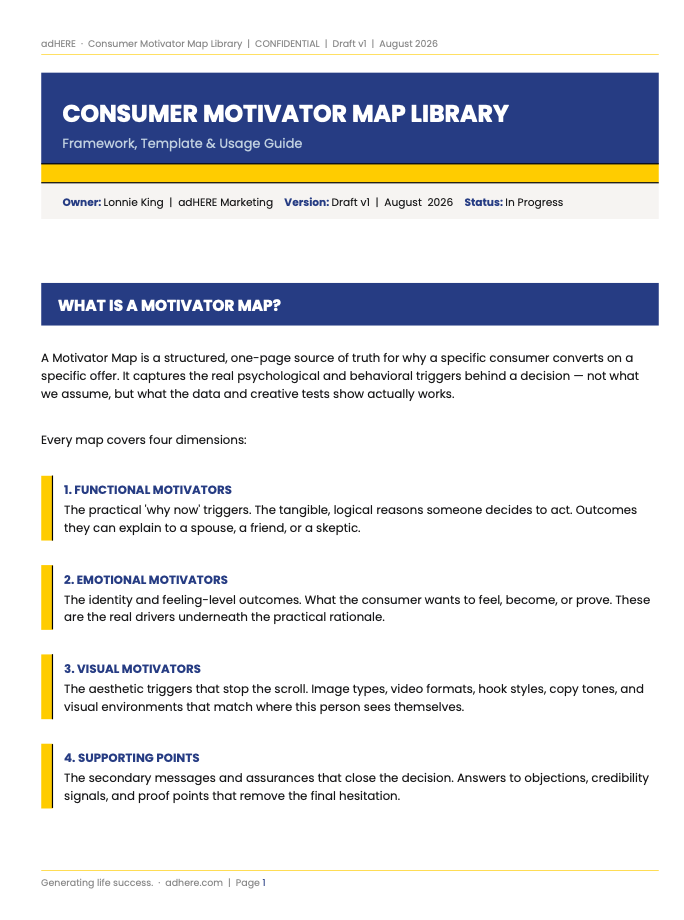
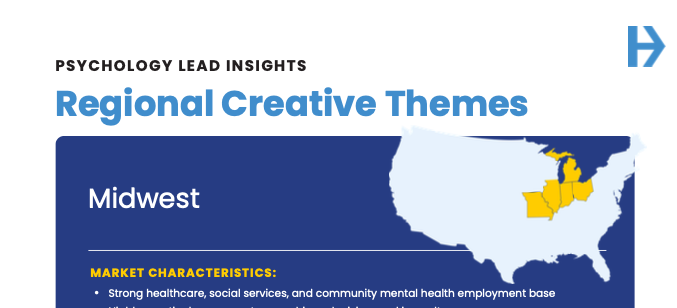
- The regional “motivator maps”
- The messaging guidance
Directed
- The CRO test plan, with the creative team
- Targeting changes, with the media team
03Process
How it came together.
01
Dig in
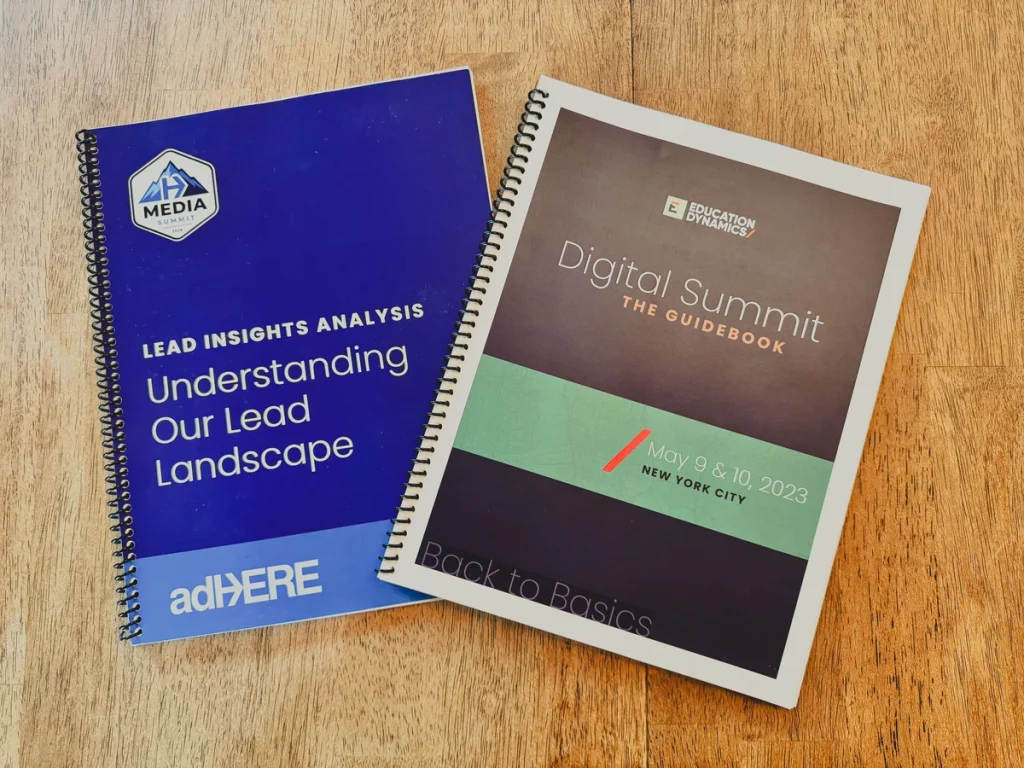
Analyzed a large lead dataset across multiple brands and programs by education level, geography and age/graduation cohort, to see who actually converts, not just who inquires.
02
Separate signal from volume
Found which audience traits predicted conversion versus which ones just predicted lead volume.
03
Make it usable
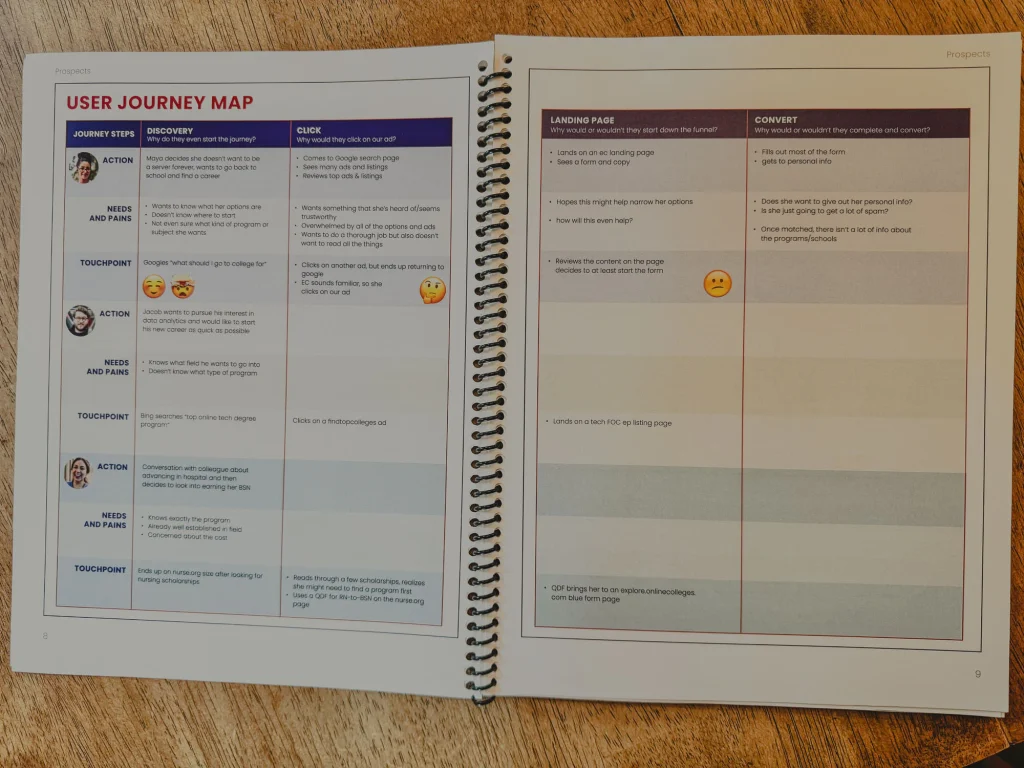
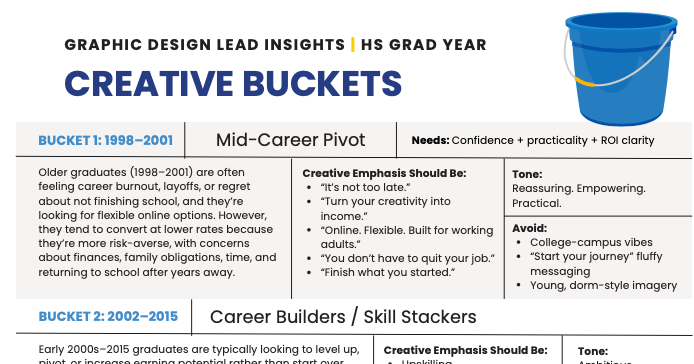
Turned the findings into audience personas, regional motivator maps and messaging guidance: what to emphasize, what to avoid, and tone by segment.
04
Test with a hypothesis
Prioritized CRO tests based on the research instead of testing at random, and fed the same insights to media to adjust targeting by region and program.
04The work
What it made possible.
05What changed
Fewer guesses, better tests.
A single headline change, informed by the research, lifted conversion about 8% and lead quality about 4–5%, pushing gross profit up more than 10% on that test. Media targeting based on regional differences made ad spend more efficient across programs. And creative grounded in real audience data more than doubled the team’s rate of producing a winning variant. Next up: a structured hypothesis-testing framework that becomes the standing source of truth for every program and campaign.
The highlight
It wasn’t “more testing.” It was testing with a hypothesis instead of a guess. Once creative and media worked from the same audience data, the win rate changed, and nobody had to re-argue the same assumptions every campaign.
NextMore case studies
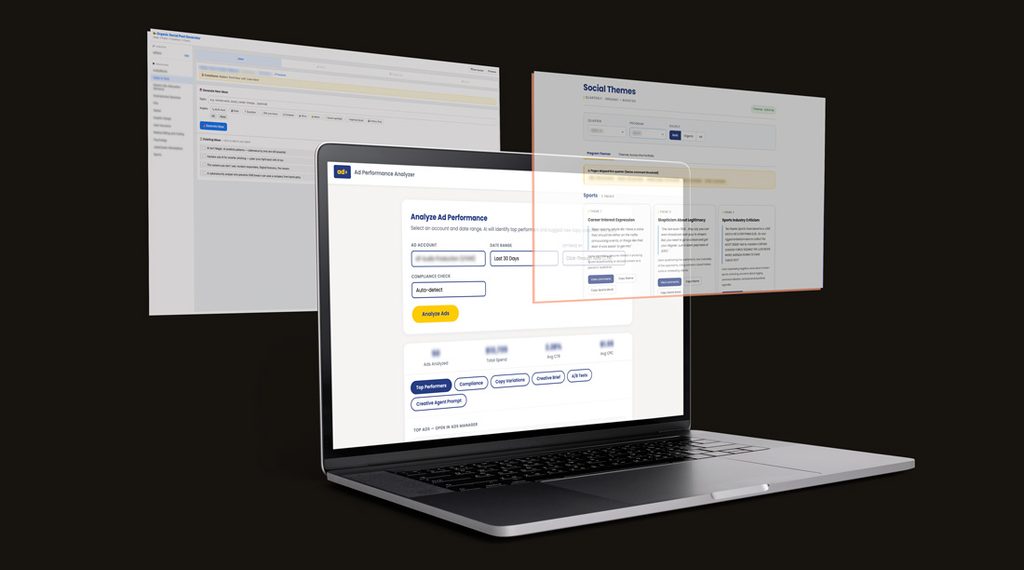
The creative engine at adHere
−58% creative budget · 60% faster content →
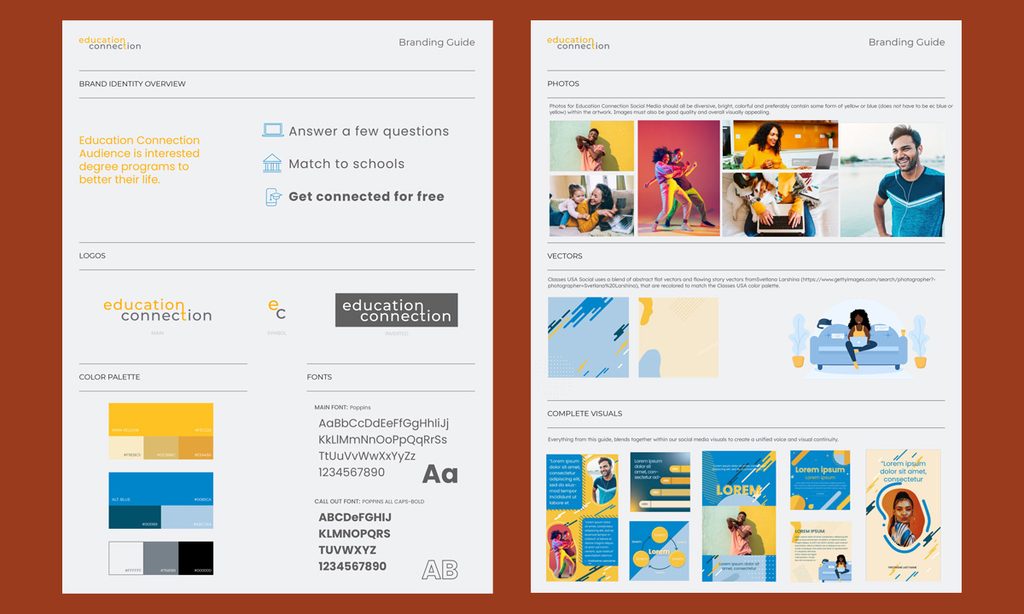
Rebuilding creative for scale
+20% ROAS · −40% turnaround →